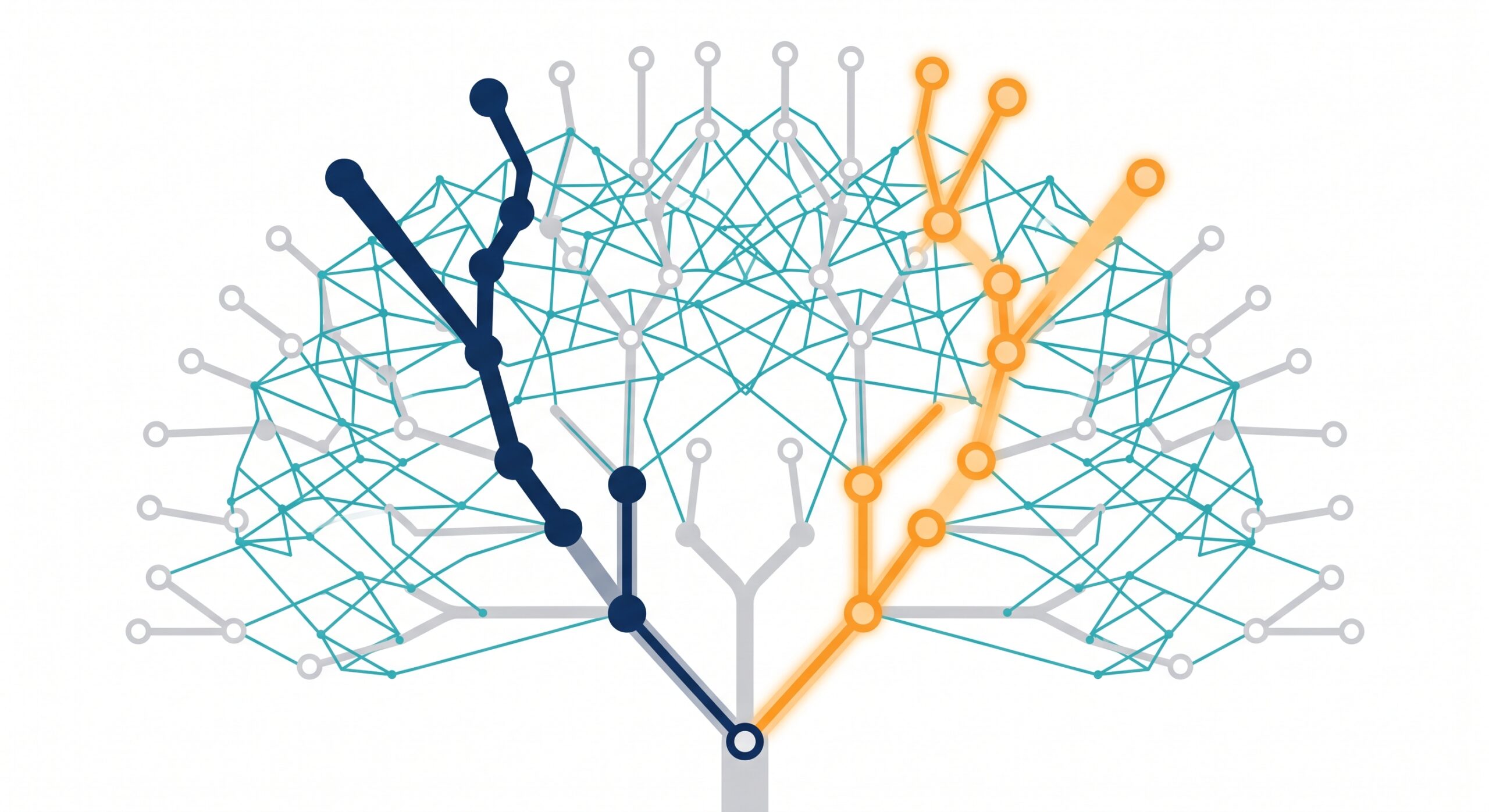
When you first embark on your genetic genealogy journey, a single autosomal DNA test feels like an endless ocean of discovery. You are presented with thousands of cousin matches, regional ethnicity estimates, and automated family tree theories. However, as your research progresses and you attempt to climb past the 4th or 5th generation, you will inevitably encounter gaps. Because autosomal DNA is shuffled by recombination in every generation, and the expected share you inherit from any one ancestor roughly halves with each generation, it becomes increasingly limited when tracing distant ancestors or isolating specific ancestral lines. To break through these brick walls, you will often need to move from a single-test approach to a coordinated, multi-test strategy.
By strategically combining DNA tests for genealogy, you can examine your heritage from multiple molecular angles. While autosomal DNA maps your overall cousin network, Y-DNA and mtDNA act as targeted, largely non-recombining genetic markers that follow your direct paternal and maternal lines. In this comprehensive guide—serving as Part 5 of our Getting Started with DNA Testing for Genealogy series—we will explore the biological synergy of combining autosomal, Y-DNA, and mtDNA tests. We will lay out concrete research scenarios, explain how to coordinate multi-test results, and show you how to use relationship probability tools to help solve your most complex family history mysteries.
To design an effective research strategy, you must understand how these three test classes complement each other:
| Test Class | Inheritance Path | Recombination? | Primary Genealogical Use |
|---|---|---|---|
| Autosomal | Maternal & Paternal (All branches) | Yes (Random mix) | Finding cousins within roughly 5 generations, testing your overall tree |
| Y-DNA | Direct Paternal (Father's father...) | Essentially none (passed on largely intact; changes only by occasional mutation) | Surname projects, paternal brick walls |
| mtDNA | Direct Maternal (Mother's mother...) | Essentially none (passed on largely intact; changes only by occasional mutation) | Maternal brick walls, haplogroup origins |
The Biological Synergy of a Multi-Test Strategy
Nuclear DNA consists of your autosomes and sex chromosomes, while mitochondrial DNA is extranuclear. An autosomal DNA test examines DNA inherited through all of your ancestral lines: you have 256 sixth-great-grandparents, although because of recombination you inherit detectable DNA from only a subset of them. Because of this random recombination, autosomal DNA is highly effective at finding recent cousin connections, but it is genetically noisy. It cannot tell you which specific ancestor a chromosome segment came from without meticulous segment mapping. To review the mechanics of autosomes, see our guide to understanding autosomal DNA testing (Part 2).
When you introduce Y-DNA or mtDNA, you add a lineage-specific anchor to your research. Because the Y chromosome (passed father to son) and mitochondrial DNA (passed mother to children) are inherited largely without recombination (apart from small regions at the tips of the Y chromosome), they change only slowly through occasional mutations and can remain identical or nearly identical across many generations. Combining autosomal data with these lineage-specific tests helps you evaluate whether an autosomal cousin match is consistent with a connection along your direct paternal surname line, your direct maternal line, or another branch of your pedigree tree.
Three Forensic Scenarios for Combining DNA Tests
To understand the practical power of combining DNA tests for genealogy, let us examine three illustrative research scenarios where a single autosomal test may not be enough, but a multi-test strategy can help resolve the question:
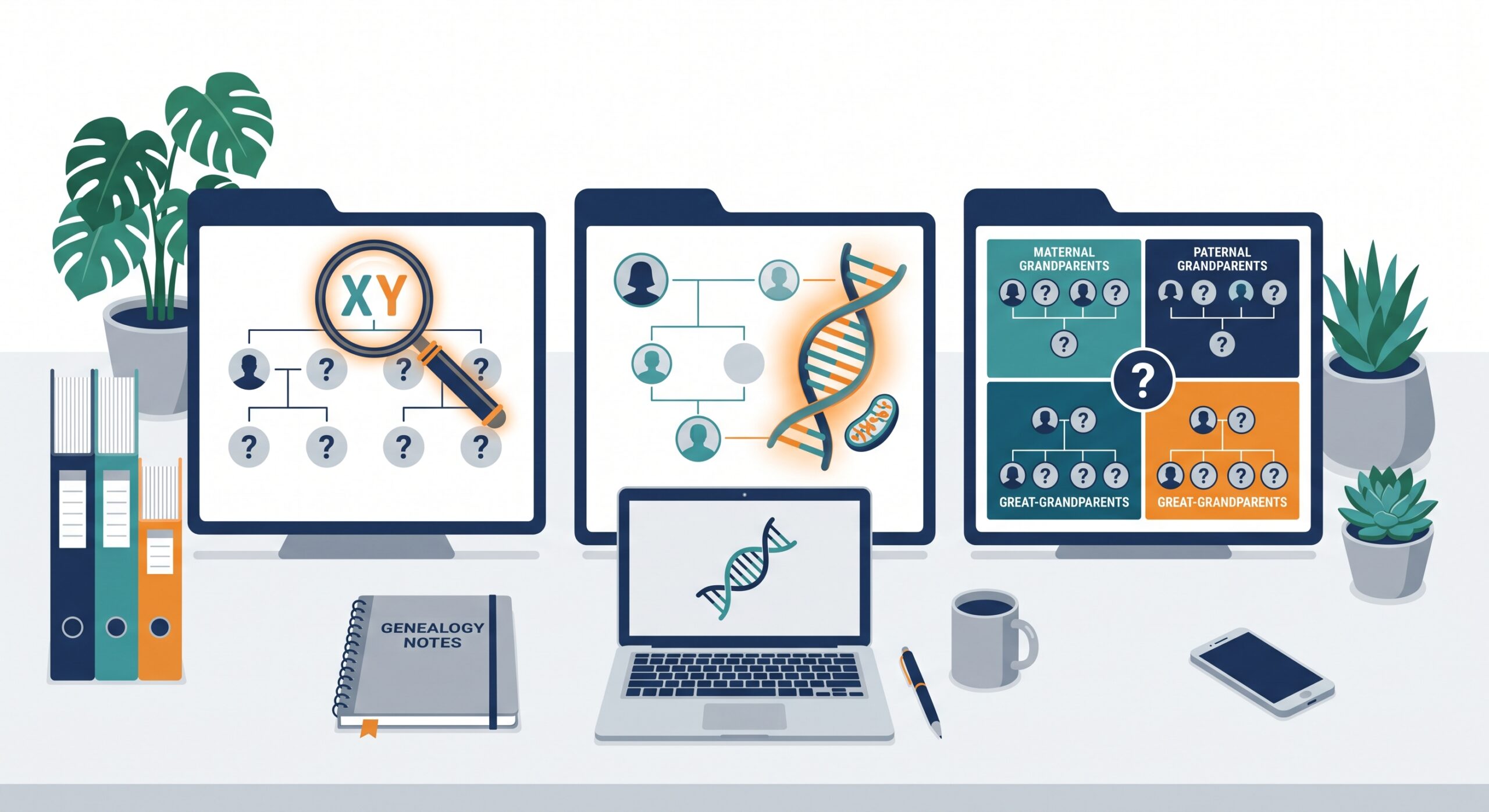
Scenario 1: Resolving a Paternal Surname Brick Wall (Autosomal + Y-DNA)
Imagine your paper trail ends in 1840 with a great-great-grandfather named William Miller. Because "Miller" is a common surname, traditional census searches and parish indexes leave you with five potential candidate families in the county. You have hundreds of autosomal cousin matches, but because the shared DNA is diluted, you cannot isolate which Miller family is yours.
The Multi-Test Strategy: You order a high-resolution Y-DNA test (such as Y-111 or Big Y-700) for yourself (or a close male Miller relative). You then join the Miller Surname DNA Project on FamilyTreeDNA. Your Y-DNA matches reveal that you share a terminal SNP (a specific paternal-line mutation) with descendants of one of the five Miller candidate families. By combining this paternal signature with your autosomal match list—looking for autosomal cousins who descend from that same Miller family—you can narrow your search to a likely set of great-great-great-grandparents, potentially breaking through a 150-year-old brick wall. A Y-DNA match shows a shared paternal-line ancestor but not, on its own, exactly which individual that was, so the finding should still be tested against documentary records. Review the details of paternal inheritance in our Y-DNA testing guide (Part 4).
Scenario 2: Overcoming a Maternal Maiden Name Gap (Autosomal + mtDNA)
Tracing maternal lines is notoriously difficult because women historically adopted their husbands' surnames upon marriage, leaving their maiden names unrecorded in many vital indexes. If your 3rd-great-grandmother is listed in records simply as "Sarah," identifying her parents using traditional records alone can be extremely difficult.
The Multi-Test Strategy: You locate a living, direct maternal descendant of Sarah and sponsor an mtDNA Full Sequence test for them. Their mtDNA matches reveal a genetic distance of 0 (an exact mitochondrial match) with another tester whose direct maternal tree is fully documented back to a family named "Green" in the same parish. You then audit your autosomal matches: you look for cousin matches who share a plausible amount of DNA with you (for example, 40 cM, which is consistent with a range of distant relationships) and also descend from that same Green family. Because the mtDNA match and the autosomal matches point to the same family, you have strong supporting evidence that Sarah's maiden name was Green. However, mtDNA changes so slowly that an exact match can reflect a common maternal ancestor many generations back, so the conclusion should be confirmed with records. Review maternal inheritance pathways in our mtDNA testing guide (Part 3).
Scenario 3: Solving Complex Adoptions and Unknown Parentage (Autosomal + Y-DNA + mtDNA)
For adoptees or individuals searching for unknown biological parents, a single DNA database match list can contain thousands of confusing matches. Sorting these matches into biological branches requires a systematic approach.
The Multi-Test Strategy: Start by performing an autosomal test to build your cousin network (using AncestryDNA). Next, upload your raw data to MyHeritage to expand your matches. Then add Y-DNA and mtDNA as targeted filters: if you are male, your Y-DNA matches may include men who share the surname of your biological father's paternal line, while your mtDNA haplogroup indicates your direct maternal line. Together with autosomal match clustering, these results can help you sort your matches into paternal and maternal sides and, further, into the four grandparent branches. You can then use relationship probability tools like What Are the Odds (WATO) to test which positions in a candidate family tree best fit your shared cM. Explore these strategies in our dedicated guide to DNA testing for adoptees.
Do not try to manage results from different testing companies in your head! Download your raw autosomal data and upload it to GEDmatch (which allows cross-platform matching). Use DNA Painter to map specific chromosome segments to ancestral couples, and keep a meticulous research log to track your Y-DNA, mtDNA, and autosomal matches side-by-side. Download our customizable spreadsheets from our free genealogy templates directory to organize your multi-test findings systematically.
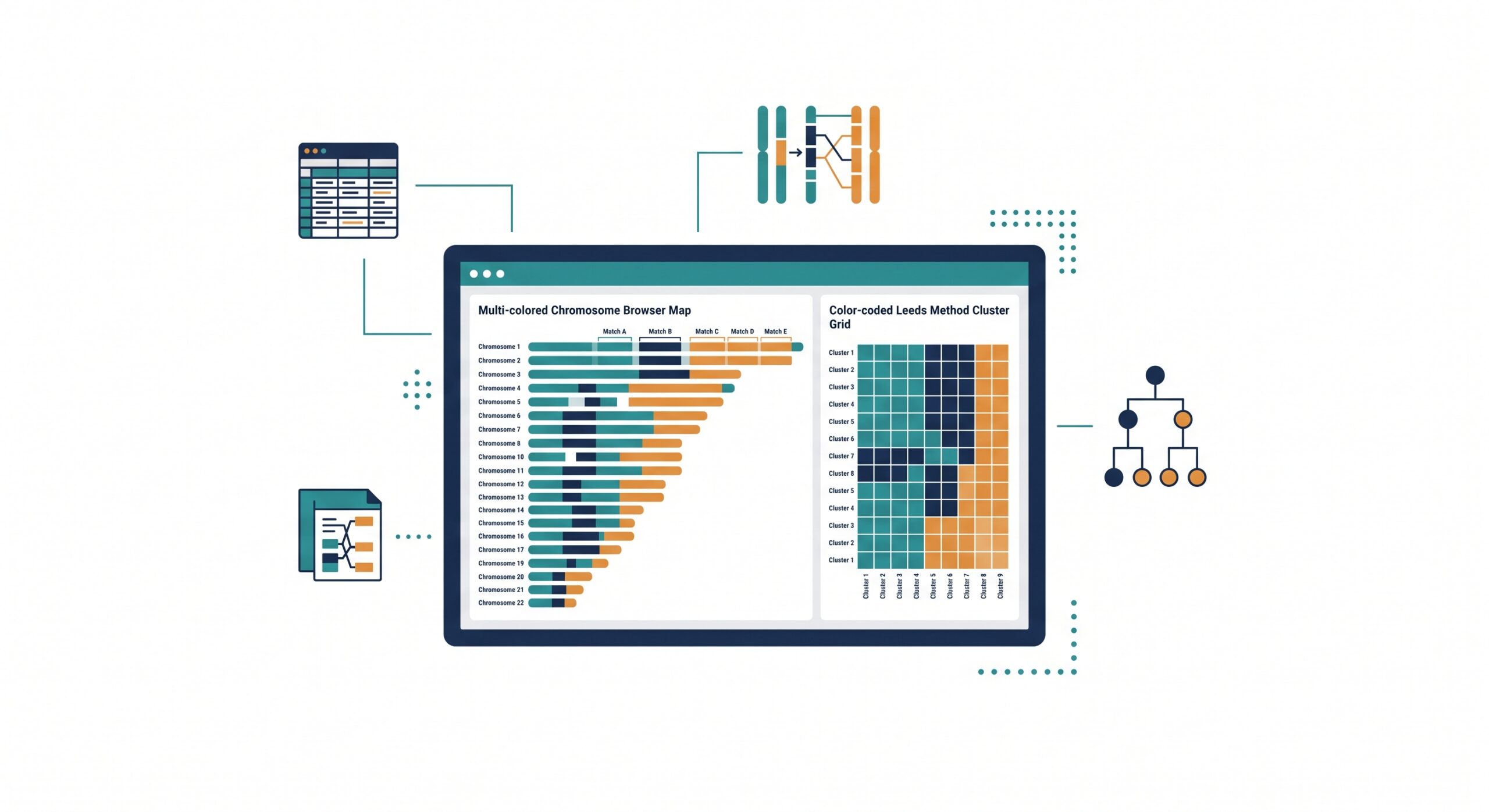
Designing a Cost-Effective Multi-Test Blueprint
Purchasing individual Y-DNA, mtDNA, and autosomal kits for multiple relatives can quickly become prohibitively expensive. To maximize your genetic reach without blowing your budget, follow this multi-test blueprint:
- First, Test Autosomal DNA at AncestryDNA: Establish your primary cousin network in one of the world's largest commercial databases. To understand how to analyze your first match list, read our beginner's guide to how DNA matching works.
- Transfer Raw Data: Export your raw DNA file and upload it to MyHeritage, FamilyTreeDNA, and GEDmatch to expand your cousin match pool at little or no cost (basic matching is typically free, while some advanced tools require payment). For an independent comparison of testing companies, see the ISOGG autosomal DNA testing comparison chart or check our master genealogy resources directory.
- Target Lineage Tests Wisely: Only order a dedicated Y-DNA (Y-37 or Y-111) or mtDNA Full Sequence test at FamilyTreeDNA when you have identified a specific paternal or maternal brick wall that autosomal matches cannot resolve. To test a maternal line, sponsor a descendant of your maternal ancestor who is connected to her through an unbroken chain of mothers; to test a paternal line, sponsor a male relative connected through an unbroken chain of fathers, such as a paternal uncle or brother.
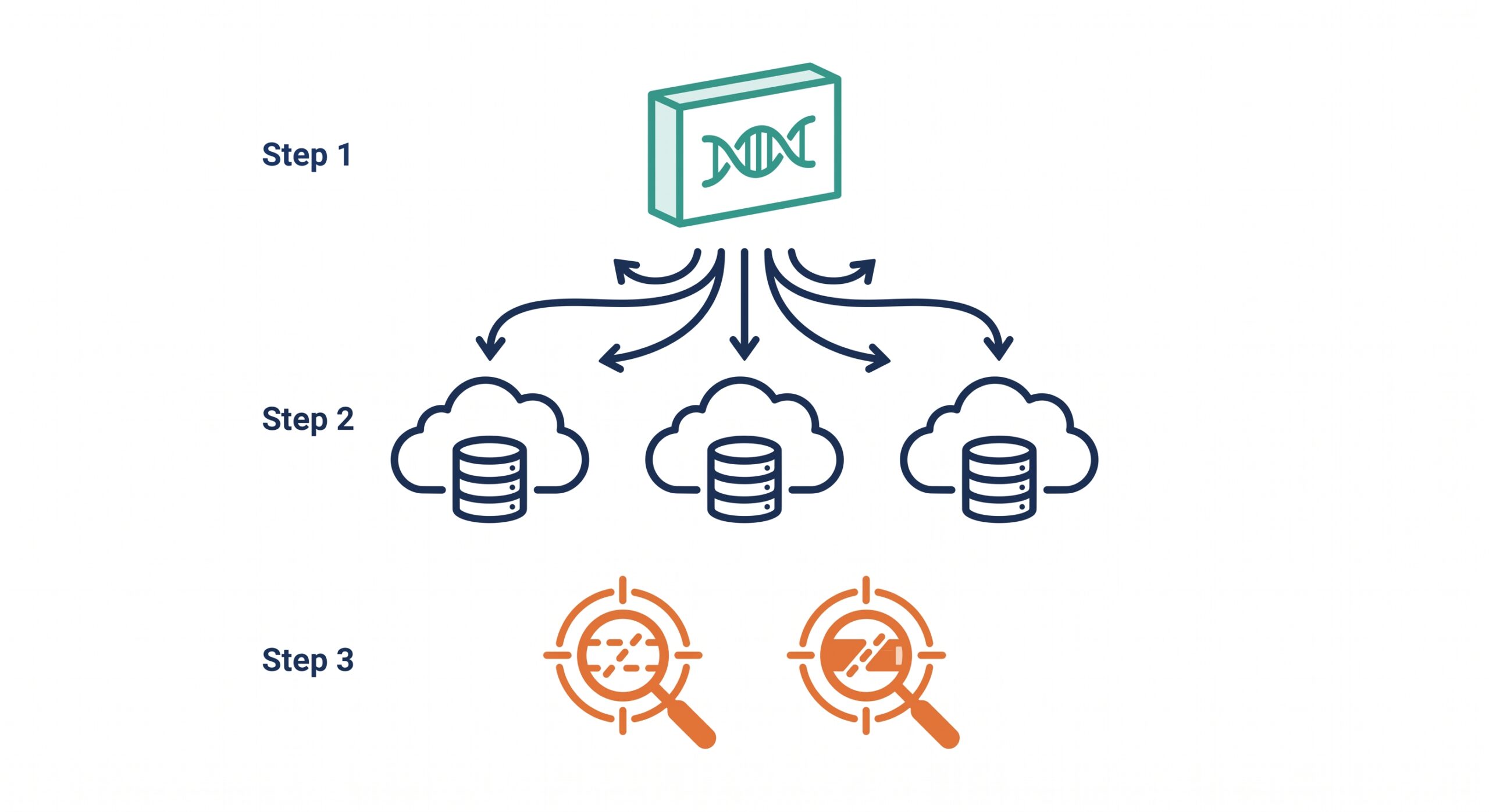
Many commercial advertisements imply that a single DNA swab will instantly reveal your entire family tree. This is unrealistic. A single autosomal test only provides raw data—it requires family trees, historical source analysis, and, in many cases, targeted Y-DNA or mtDNA tests to turn genetic matches into well-supported ancestors. Always back up your genetic hypotheses with original civil vital registers and parish church books. Find the exact regional archive for your target ancestor in our global genealogy resources by country directory.
Frequently Asked Questions About Combining DNA Tests
Can I upload Y-DNA or mtDNA results to GEDmatch?
GEDmatch is designed primarily for autosomal DNA comparisons, segment triangulation, and admixture analysis. While you can upload your autosomal raw data (which contains some basic Y and mitochondrial haplogroup markers) to GEDmatch, it is not the place to compare detailed FamilyTreeDNA STR marker lists (like Y-111) or full mtDNA sequences. Those specialized comparisons are done primarily within FamilyTreeDNA's databases and its surname and haplogroup projects.
Is it worth doing Y-DNA or mtDNA if autosomal is so much cheaper?
Yes, but only if you have a specific, lineage-focused research question. If you are trying to find cousins within about 4 generations, autosomal DNA is usually sufficient. However, if you are attempting to trace a direct paternal surname line back to Europe in the 1700s, autosomal DNA is often uninformative because shared segments become small and increasingly unlikely to be inherited at all. Y-DNA is one of the few tools that can link male-line relatives across those deeper centuries, although its results still need to be interpreted alongside documentary evidence.
How do I test a maternal grandmother’s line if she has passed away?
You do not need her physical DNA kit. Because mitochondrial DNA is passed down along the direct maternal line with very few changes, anyone who descends from her in an unbroken female chain carries essentially the same mtDNA as she did, apart from rare mutations. You can test yourself (if you are her daughter's child), her living daughter, her daughter's daughter, or even her sister's daughter's daughter to capture her maternal signature.
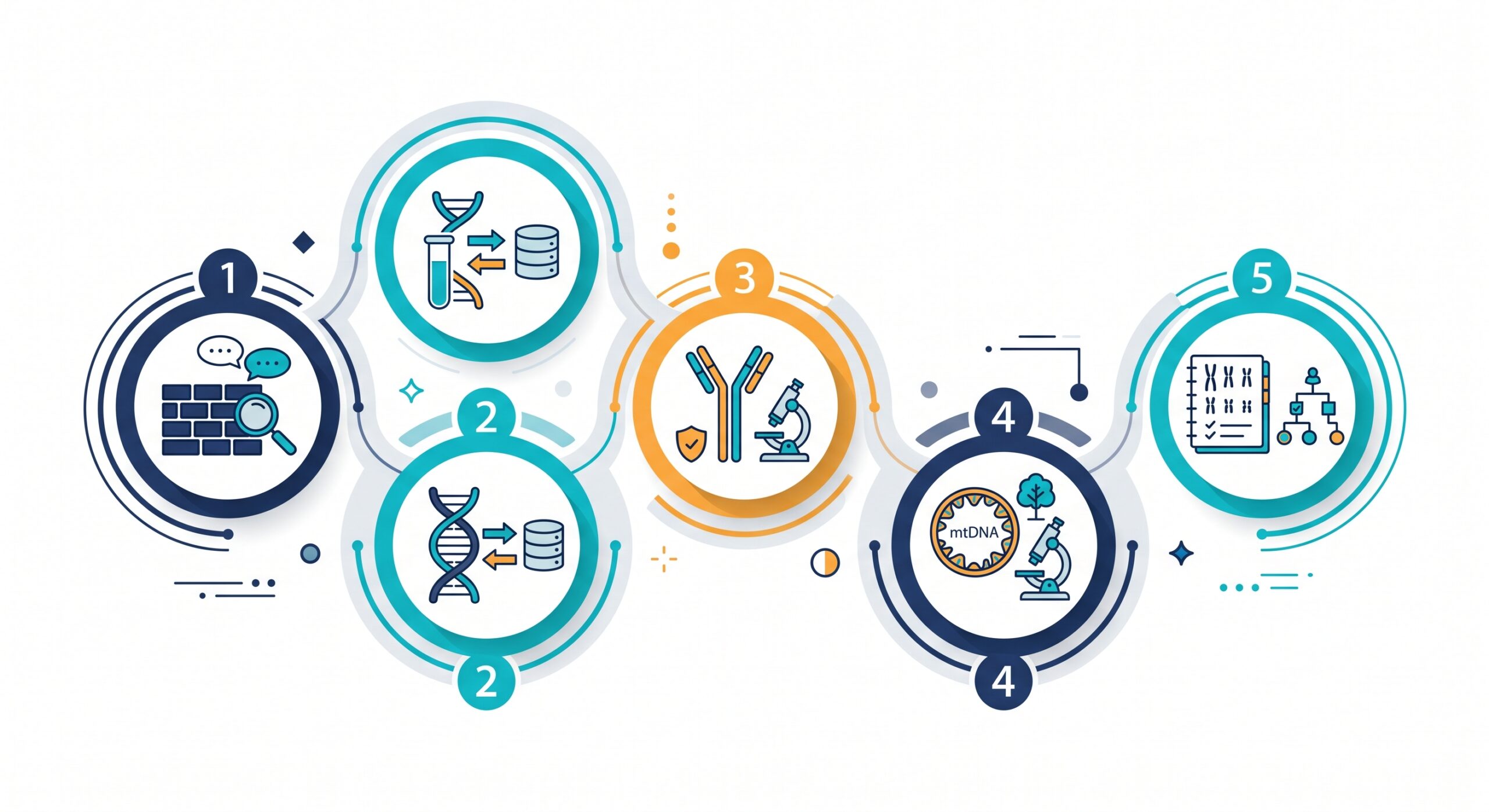
Follow these five steps to design and execute a coordinated multi-test research strategy:
- Identify the specific brick-wall ancestor in your tree and determine whether they connect along a direct paternal, maternal, or collateral branch.
- Perform an autosomal test (at AncestryDNA) and transfer the raw data to MyHeritage and GEDmatch to maximize your cousin matches.
- If the brick wall is paternal (your father's paternal line), locate a male relative from that surname branch and sponsor a FTDNA Y-37 or Y-111 test.
- If the brick wall is maternal (your mother's maternal line), locate a direct female-line descendant of that maternal ancestor and sponsor a FTDNA mtDNA Full Sequence test.
- Log all your matches, terminal SNPs, and haplogroups in your chronological family workbook using our free genealogy templates.
Reconstruct Your True Biological Legacy
Combining DNA tests for genealogy can transform your family history from a collection of unverified paper records into a research project supported by both documents and genetic evidence. By coordinating autosomal cousin matches with targeted Y-DNA paternal signatures and mtDNA maternal lineages, you can build a well-supported family tree that stands as a lasting legacy for your descendants.
Ready to put your genetic knowledge into action? Proceed to Part 6 of our series: Practical Steps to Start DNA Genealogy to learn the step-by-step workflow for ordering, taking, and analyzing your very first genetic tests. Or, if you need to evaluate relationships statistically, use our online DNA Relationship Calculator.
Sources and Further Reading
- ISOGG Wiki: Paths of DNA inheritance – how autosomal DNA, Y-DNA, and mtDNA are passed down.
- ISOGG Wiki: Autosomal DNA statistics – expected shared DNA by relationship.
- ISOGG Wiki: Haplogroup – definition of Y-DNA and mtDNA haplogroups.
- ISOGG Wiki: Autosomal DNA testing comparison chart – comparison of autosomal tests from major companies.
- National Human Genome Research Institute (NHGRI): Mitochondrial DNA – genetics glossary entry.
- The Shared cM Project (Blaine Bettinger), interactive tool at DNA Painter – possible relationships for a given amount of shared DNA.
- DNA Painter: Tools for genetic genealogy – includes the What Are the Odds? (WATO) tool for testing hypotheses about where a match fits in a tree.